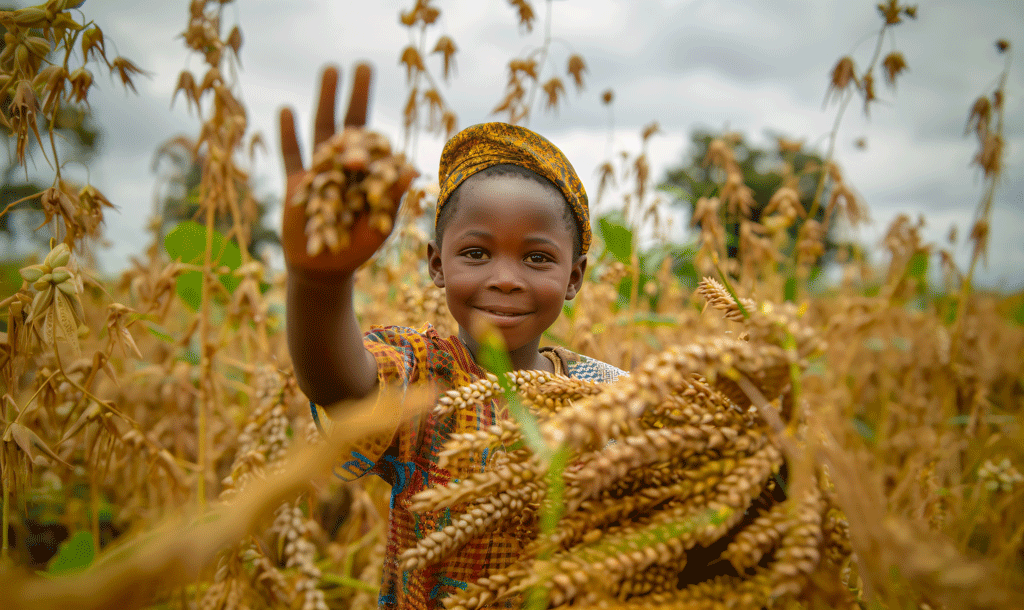


Sorghum is an important agricultural crop in Chad and can be an important grain and forage crop, particularly in areas where rainfall is irregular. However, achieving consistent and productive sorghum production depends on more than the seed itself. Soil preparation, timely planting, weed and pest management, harvesting, threshing and post-harvest operations should all be considered together.
Because rainfall can be irregular and agricultural conditions vary between regions of Chad, farmers need to use available rainfall efficiently and complete field operations at the right time.
The goal is therefore not simply to carry out more field operations, but to perform the right operation at the right time using suitable agricultural machinery.
Sorghum is an important cereal crop that can adapt to different climatic and production conditions. It is also an important crop for rainfed farming systems in Chad.
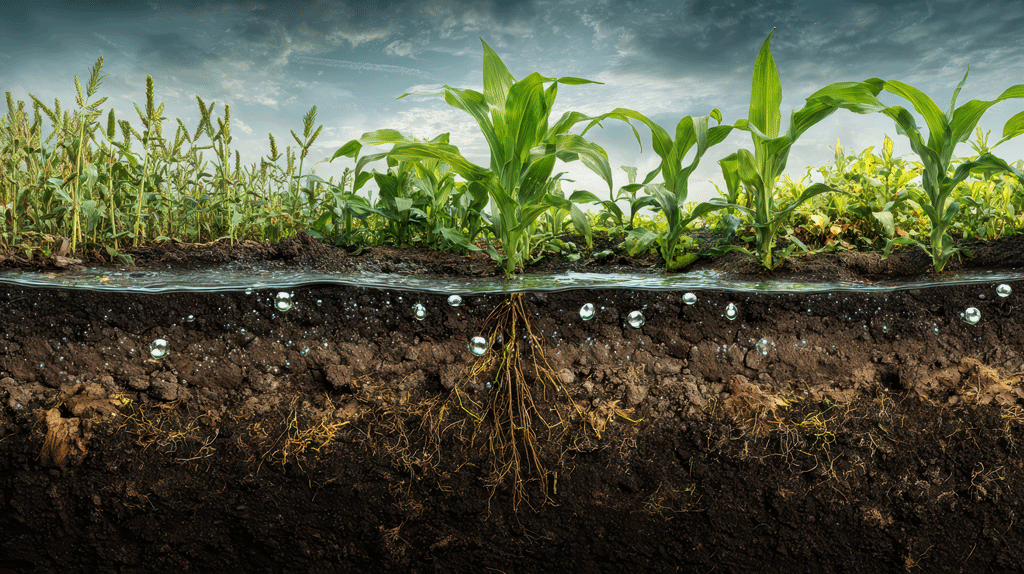
However, the fact that sorghum is relatively tolerant of dry conditions does not mean that it does not require water or good field management.
Farmers should focus on:
selecting suitable fields,
preparing the soil appropriately,
planting at the right time,
managing weeds and pests,
harvesting at the appropriate stage,
and reducing avoidable harvesting and threshing losses.
These operations are closely connected.
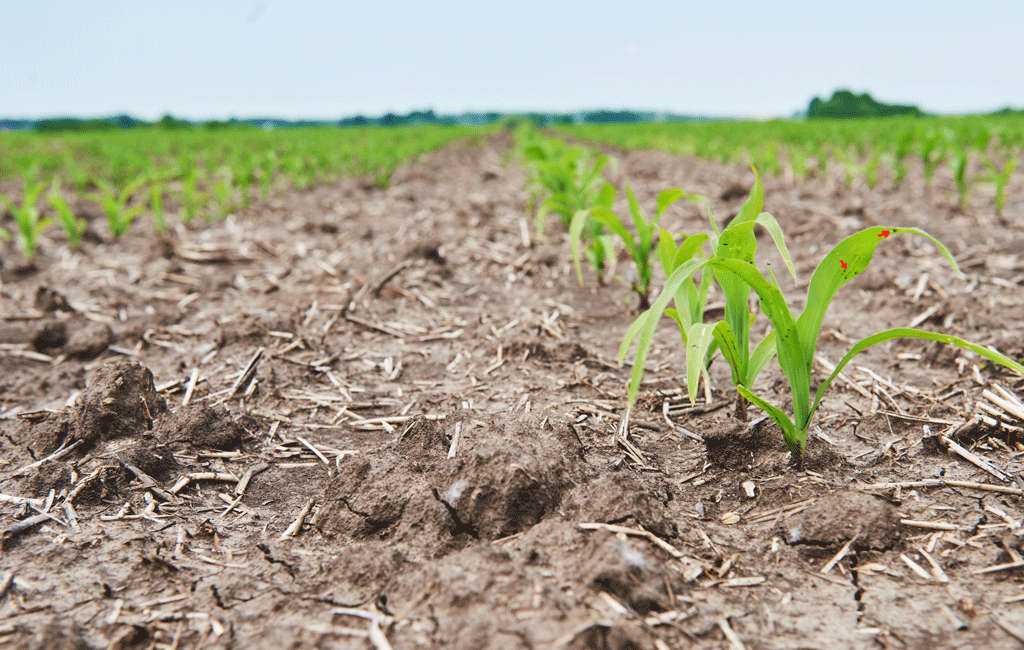
Proper seedbed preparation is important for establishing a productive sorghum crop.
However, the same tillage system should not automatically be used in every field. Soil type, previous crop, crop residues, existing soil moisture, tractor horsepower and planting method should all be considered.
The objective is not to disturb the soil as much as possible, but to create suitable conditions for seed germination and early crop development.
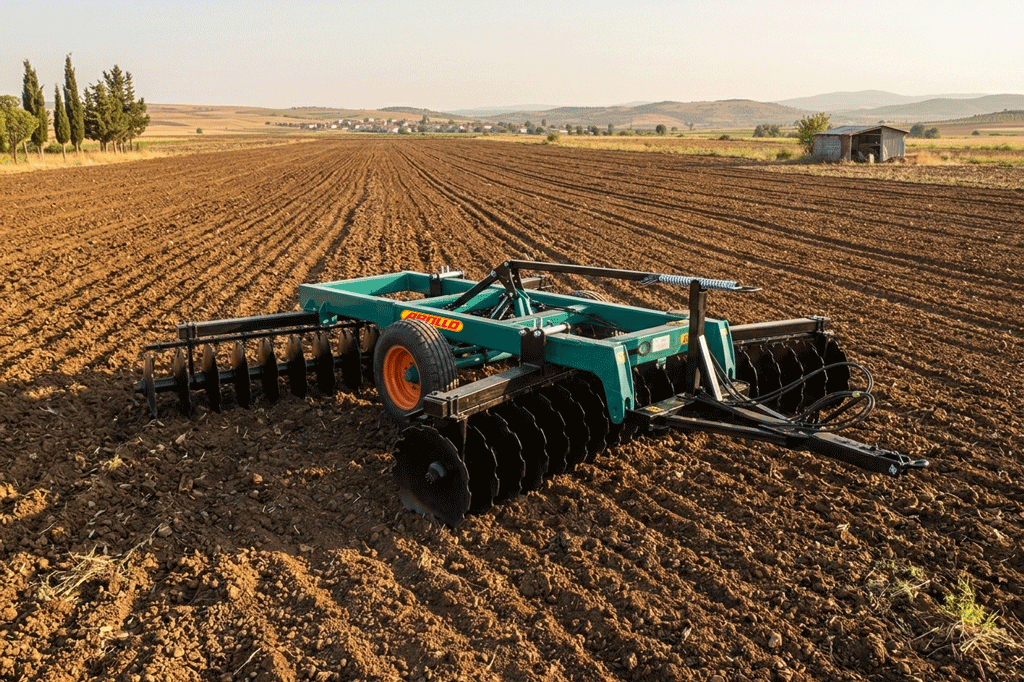
A Disc Harrow can be considered for surface soil cultivation and crop residue management when field conditions are suitable.
ABOLLO Goble Disc Harrows can be evaluated for operations involving surface soil cultivation and the management of crop residues.
With an appropriate working depth and machine setting, surface cultivation can help:
manage crop residues,
prepare the soil surface,
and make subsequent field operations easier.
Working depth and the number of passes should always be determined according to actual field conditions.
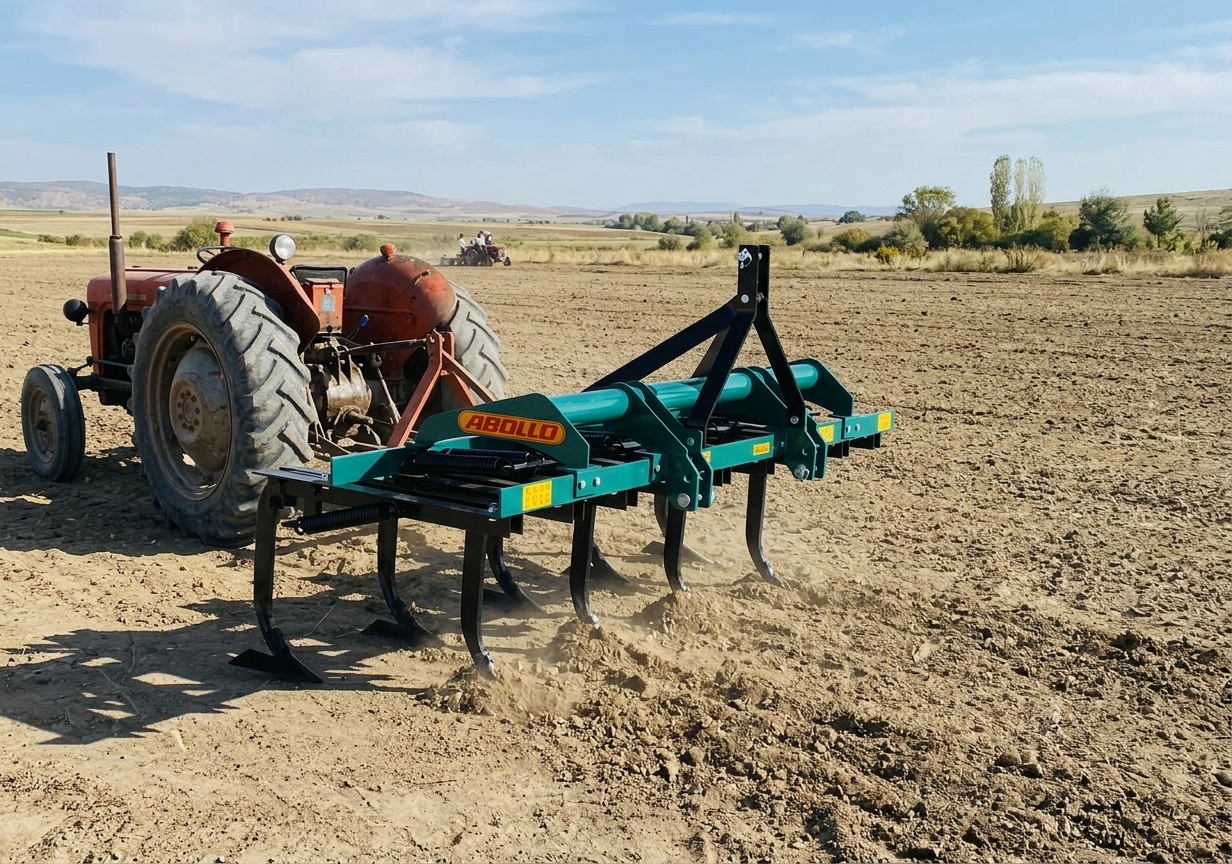
After initial soil preparation, a Cultivator can be used for secondary tillage where appropriate.
Cultivators can help with:
refining the soil surface,
secondary soil tillage,
seedbed preparation,
and mechanical weed control where suitable.
ABOLLO Cultivators can be evaluated according to tractor horsepower and field conditions.
The objective is not to make a fixed number of passes on every field.
Completing the required operation with as few suitable passes as possible can be especially important in rainfed farming systems because it can save time and fuel.
Some fields may require a finer and more uniform seedbed before planting.
In such conditions, a suitable Rotary Tiller may be considered for the final stages of soil preparation.
A Rotary Tiller can help:
break up the soil,
improve surface uniformity,
and create a suitable seedbed.
However, excessive soil disturbance or repeated tillage is not necessarily beneficial under dry conditions.
Rotary tillage should therefore be planned according to soil moisture, soil structure and planting conditions.
Using the right machine is not enough. Planting at the right time can also have an important influence on crop performance.
In rainfed regions of Chad, missing a suitable rainfall period can make it more difficult for the crop to receive sufficient moisture during important growth stages.
Farmers should therefore consider:
Suitable soil moisture + correct planting time + appropriate planting method
together.
Delaying planting too long can reduce the crop's development period and yield potential, particularly where the rainy season is relatively short.
How Can the Right Planting Machine Support Sorghum Production?
Placing sorghum seed at an appropriate depth and with consistent spacing can help support more uniform crop establishment.
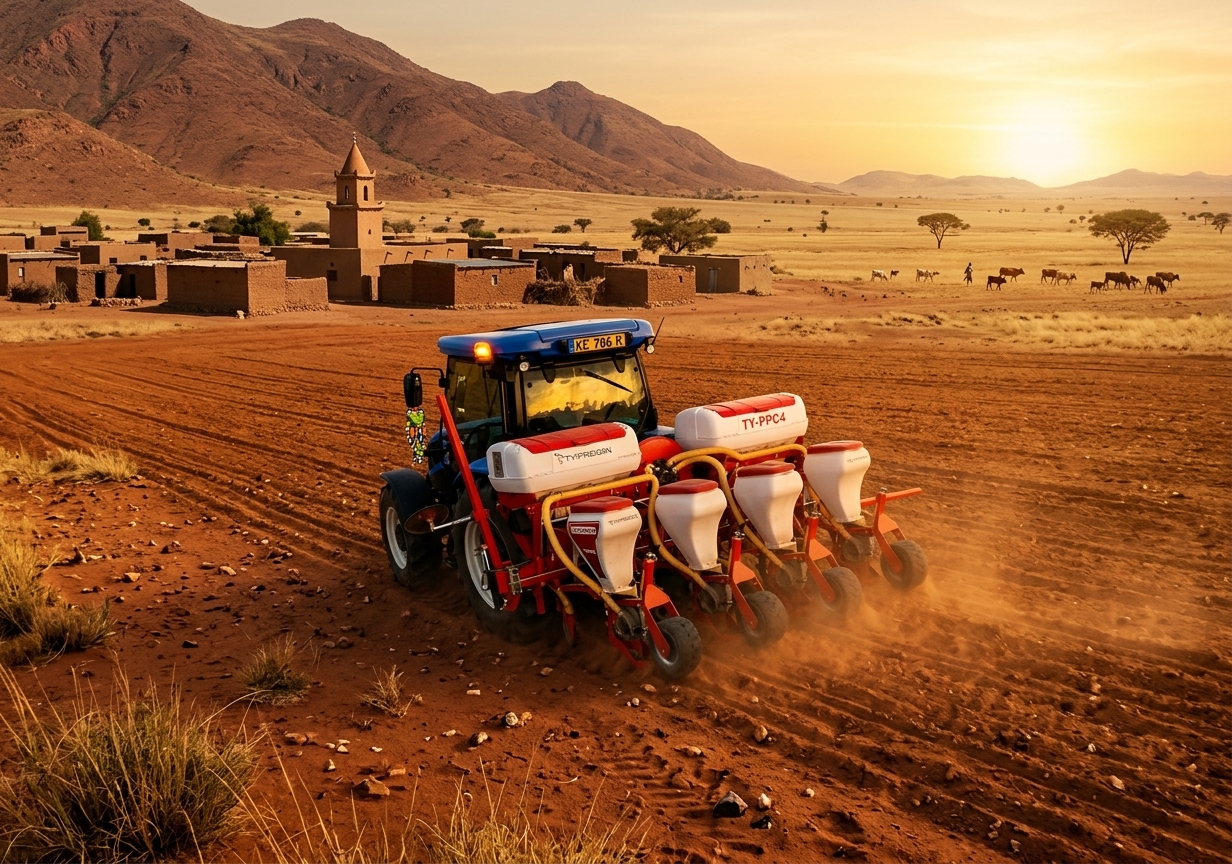
A suitable Planting Machine can help:
complete planting more quickly,
maintain row spacing,
place seeds more consistently,
and complete planting within a suitable planting window.
The main advantage is not simply machine speed.
In rainfed agriculture, completing planting on time when suitable conditions are available can also be an important advantage.
During the early stages of sorghum development, weeds can compete with the crop for water, light and nutrients.
Farmers should therefore monitor their fields regularly and use appropriate weed and pest management practices when necessary.
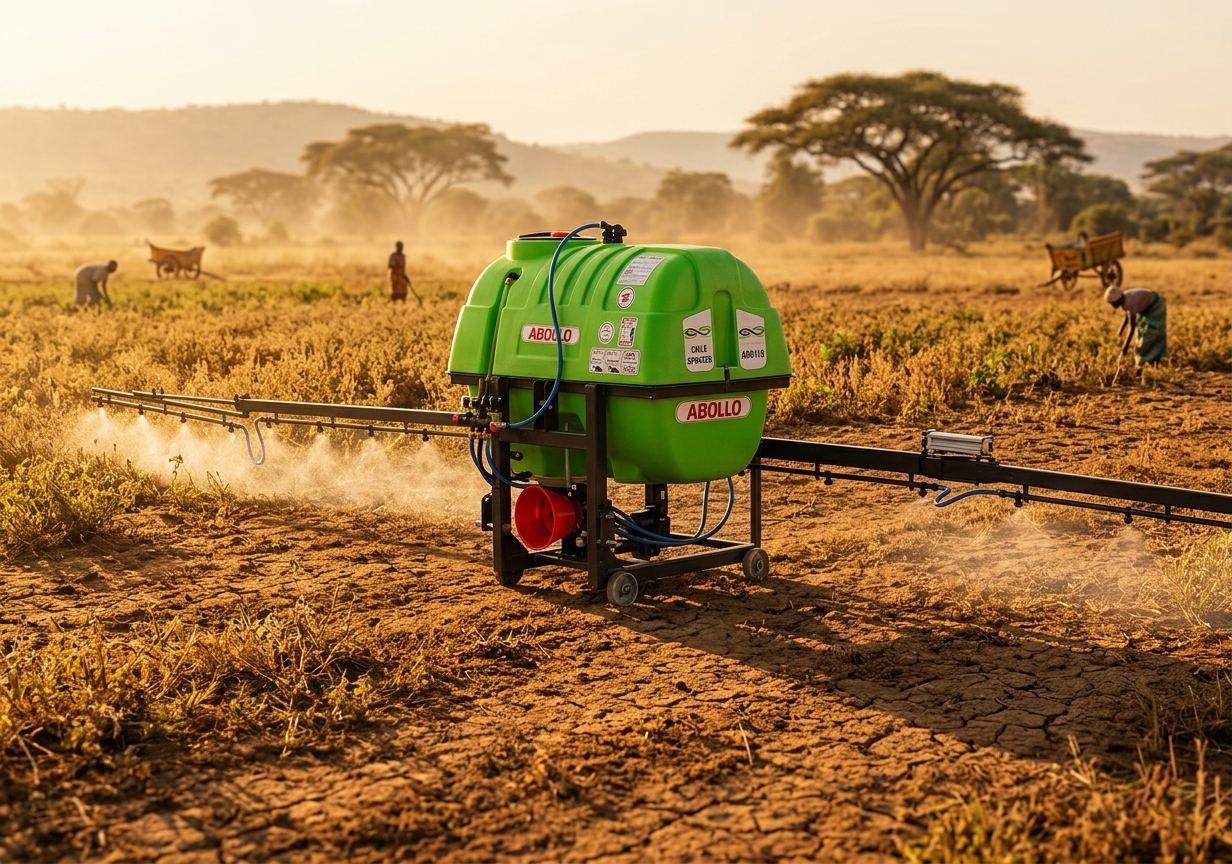
Where required, a suitable Field Sprayer can help farmers apply crop protection products more efficiently and consistently.
However, treatment decisions should be based on the crop growth stage, the target pest or weed, product label requirements and local agricultural practices.
The objective is not to use more crop protection products, but to make the right application at the right time when treatment is necessary.
Planting is not the end of crop management.
Farmers should regularly monitor:
weed pressure,
pest and disease symptoms,
crop development,
soil moisture,
signs of nutrient deficiency,
and uneven crop growth.
Early identification of problems can help farmers respond in a timely manner.
Choosing the right harvest time is important for managing product quality and harvesting losses.
Harvesting too early can result in high grain moisture. Harvesting too late can increase the risk of field losses, lodging and other harvesting problems.
Farmers should therefore consider:
crop maturity + grain moisture + weather conditions + harvesting method
together.
For larger fields, completing harvesting within a suitable time window can provide important advantages.
Suitable harvesting equipment and proper machine settings can:
reduce harvesting time,
reduce labor requirements,
help farmers harvest on time,
and contribute to controlling harvesting losses when correctly adjusted.
The machine itself does not automatically increase yield.
The right machine + correct settings + appropriate harvest timing can help farmers protect more of the crop's yield potential.
Harvesting is not the end of the production process.
Losses can also occur during threshing, cleaning, transportation and storage.
Farmers should therefore consider:
the appropriate threshing method,
grain moisture,
machine settings,
transportation conditions,
and storage conditions.
Where appropriate, a Thresher can help mechanize the separation of grain from other plant material.
The objective is not simply to thresh faster, but to keep avoidable product losses under control.
Yes. Sorghum is not only grown for grain. Certain sorghum varieties can also be used for livestock feed and silage production.
In areas where livestock production is important, forage sorghum can provide another production option.
For silage sorghum, farmers should consider:
selecting a suitable variety,
choosing the appropriate growth stage,
harvesting at the right time,
proper chopping,
transportation,
and storage.
Suitable silage harvesting and processing machinery can help farmers complete harvesting on time and process the crop for livestock feed.
Sorghum harvesting can leave a significant amount of plant residue in the field.
Managing these residues can be important when preparing the field for the next crop.
This is where an ABOLLO Shredder can become part of the field management process.
A Shredder can help:
reduce the size of long stalks,
make crop residues easier to manage,
facilitate subsequent field operations,
and distribute or manage residues more effectively.
This can be an important mechanized step when the field needs to be prepared for the next crop.
Different machines can be considered at different stages of sorghum production.
| Production Stage | ABOLLO Solution | Potential Contribution |
|---|---|---|
| Surface soil and residue management | Goble Disc Harrow | Helps manage the soil surface and crop residues |
| Secondary soil tillage | Cultivator | Helps with seedbed preparation |
| Final soil preparation | Rotary Tiller | Helps create a finer seedbed where appropriate |
| Planting | Planting Machines | Helps support timely and consistent planting |
| Crop protection | Field Sprayer | Helps apply necessary treatments efficiently |
| Harvest | Suitable harvesting equipment | Helps complete harvesting efficiently and on time |
| Threshing | Thresher | Helps mechanize grain separation |
| Silage | Suitable silage machinery | Helps with forage sorghum harvesting and processing |
| Post-harvest residue management | Shredder | Helps manage sorghum stalks and crop residues |
Not every machine is required for every field. Machinery should be selected according to tractor horsepower, soil type, field size, crop variety, residue levels and the overall production system.
1. Prepare the soil according to field conditions.
Create a suitable seedbed without unnecessary tillage.
2. Use suitable rainfall and soil moisture conditions.
Plan planting around local rainfall patterns.
3. Avoid unnecessary planting delays.
Complete planting when suitable conditions are available.
4. Monitor weeds and pests early.
Early detection can support timely management.
5. Plan harvesting carefully.
Consider crop maturity and weather conditions.
6. Control harvesting and threshing losses.
Adjust machinery according to crop and grain conditions.
7. Manage crop residues after harvest.
Consider suitable mechanical residue management methods.
Higher sorghum productivity does not simply come from using more machinery.
The important point is to perform the right operation at the right time using suitable equipment.
Farmers and agricultural businesses should consider:
tractor horsepower,
soil type,
field size,
working width,
working depth,
crop growth stage,
amount of crop residue,
maintenance and service requirements,
fuel consumption,
and total operating costs.
Improving sorghum production in Chad requires more than selecting good seed. Soil preparation, timely planting, crop protection, harvesting, threshing and post-harvest management should be considered as one complete production process.
ABOLLO provides agricultural machinery for soil tillage, planting, crop residue management, harvesting and various other agricultural applications.
Rotary Tillers, Disc Harrows, Cultivators, Planting Machines, Shredders and other agricultural machinery can be evaluated according to farmers' field conditions and tractor requirements.
Farmers in Chad can contact ABOLLO to learn which machinery may be suitable for their sorghum production, tractor horsepower, field conditions and mechanization requirements.
If you are interested in improving agricultural productivity in Chad, you may also want to explore our other practical guides:
Drought Farming in Chad: How to Prepare Farmland and Conserve Soil Moisture
Learn how proper soil preparation, crop residue management and suitable tillage practices can help farmers make better use of available soil moisture in dry and semi-arid conditions.
Agricultural Subsidies and Farm Machinery Support in Chad: What Farmers Should Know
Learn about agricultural support mechanisms, input subsidies, mechanization opportunities and how farmers and cooperatives can follow potential agricultural equipment support programs in Chad.


 0332 2515120