
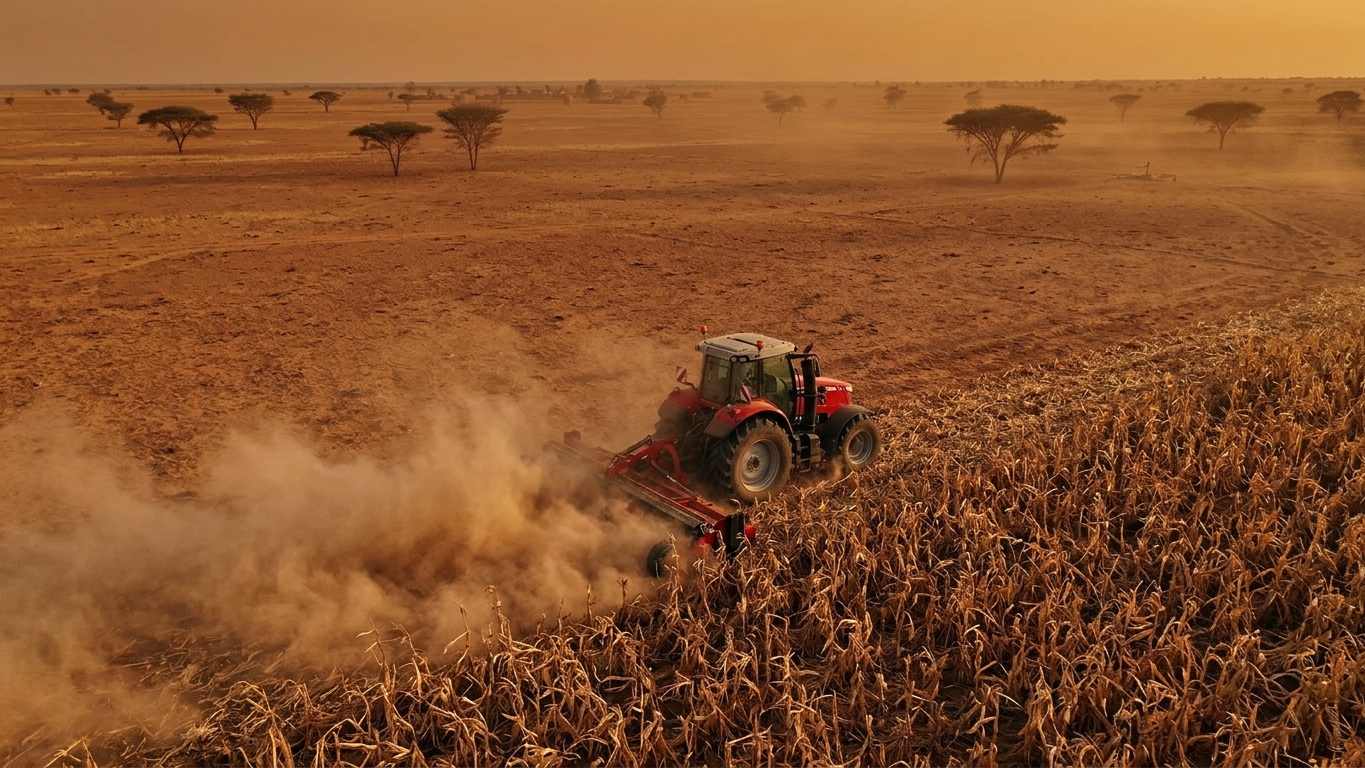

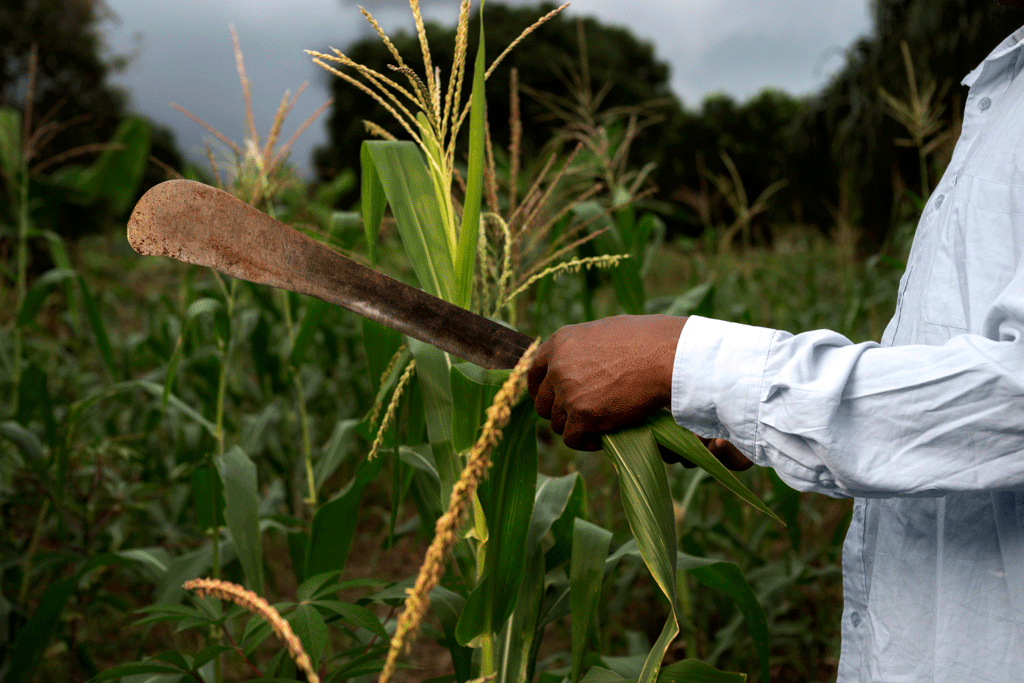

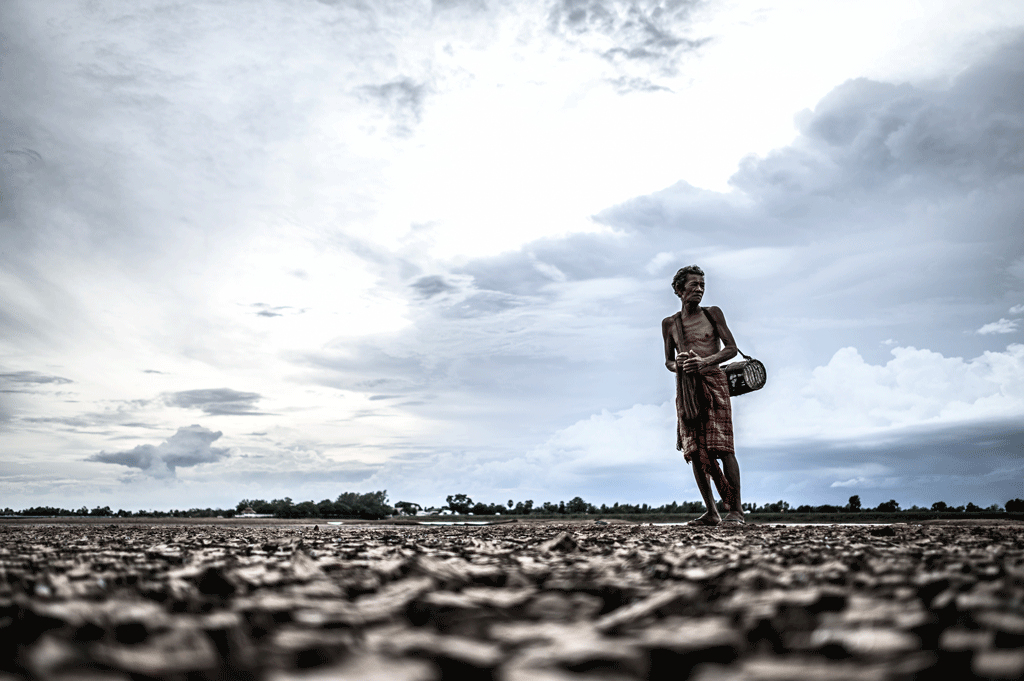
Agricultural production in Chad depends heavily on rainfall. Rainfall amounts and distribution can vary significantly between different regions of the country. For this reason, farmers need to plan field preparation according to local soil and climate conditions.
In dry and semi-arid areas, successful farming is not only about preparing the soil for planting. It is also about conserving available soil moisture, making efficient use of rainfall and creating suitable conditions for crop development.
Proper soil management, effective crop residue management and the selection of suitable agricultural machinery are therefore important elements of more productive and resilient farming in Chad.
Drought does not simply mean receiving less rainfall. The timing of rainfall, its intensity and how much of the water actually enters the soil can also directly affect agricultural production.
When heavy rain falls within a short period, not all of the water may penetrate the soil. Some water may run off the surface and contribute to erosion. Appropriate soil management can help rainfall penetrate the soil more effectively and maintain available moisture in the root zone.
For this reason, farmland preparation in Chad should not be considered simply as a mechanical operation before planting. It should be part of a broader farming strategy designed to use rainfall as efficiently as possible.
Rainfall alone is not enough for healthy crop development. Water must also be retained in the soil and remain available to plant roots.
Properly managed farmland can:
Help rainfall penetrate the soil.
Reduce surface runoff.
Help reduce the risk of soil erosion.
Support the conservation of available moisture in the root zone.
Create more suitable conditions for crop development after planting.
Therefore, the objective in dry regions should not be to disturb the soil as much as possible. The goal should be to manage the soil according to the actual conditions of the field.
Every field is different. Therefore, the same tillage method may not produce the same result under every condition.
Soil structure, previous crops, crop residues, existing soil moisture, field slope and tractor horsepower should all be considered when selecting the appropriate machinery and working settings.
Excessive tillage in very dry soil can increase fuel consumption and may negatively affect soil structure and moisture conditions.
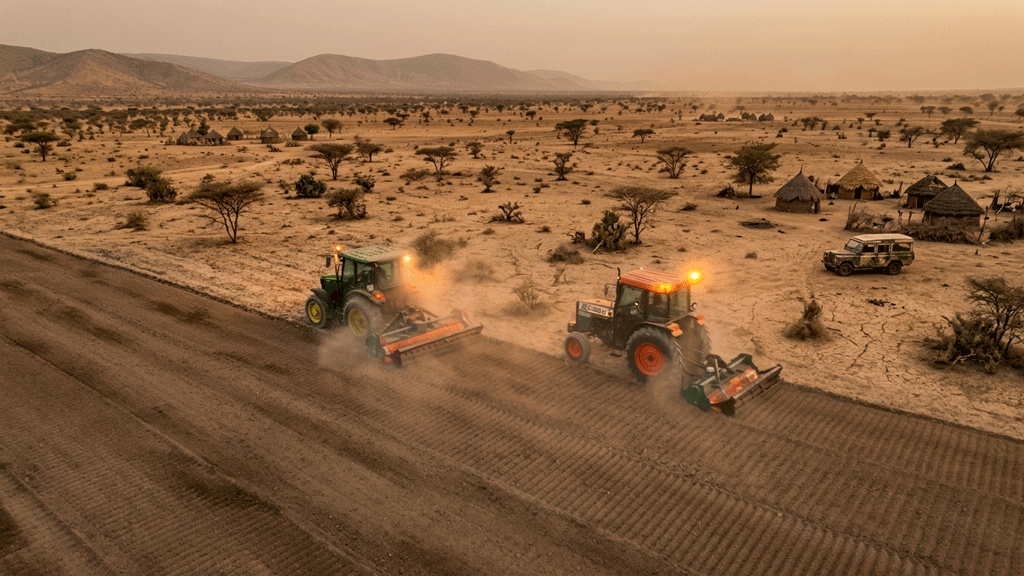
ABOLLO offers agricultural machinery designed for different soil preparation and field management needs. ABOLLO Rotary Tillers and other soil tillage solutions can be used for pre-planting soil preparation when field conditions are suitable.
However, machinery selection and working settings should always be determined according to soil structure, tractor horsepower, working depth and the actual condition of the field.
The objective is not simply to till the soil, but to prepare it for planting while avoiding unnecessary operations.
Repeated tillage does not always mean better field preparation in dry regions.
Every additional tractor pass can increase fuel and operating costs. Tillage performed at the wrong time or with unsuitable settings may also affect soil structure and contribute to moisture loss.
Farmers should therefore consider the following questions:
Is this operation really necessary?
Is the current soil moisture condition suitable?
Is the machinery appropriate for the field?
Is the working depth correct?
Can the same result be achieved with fewer passes?
These factors should also be considered when selecting ABOLLO tillage machinery.
The best machine is not necessarily the machine that disturbs the most soil; it is the machine that performs the required operation appropriately for the field.
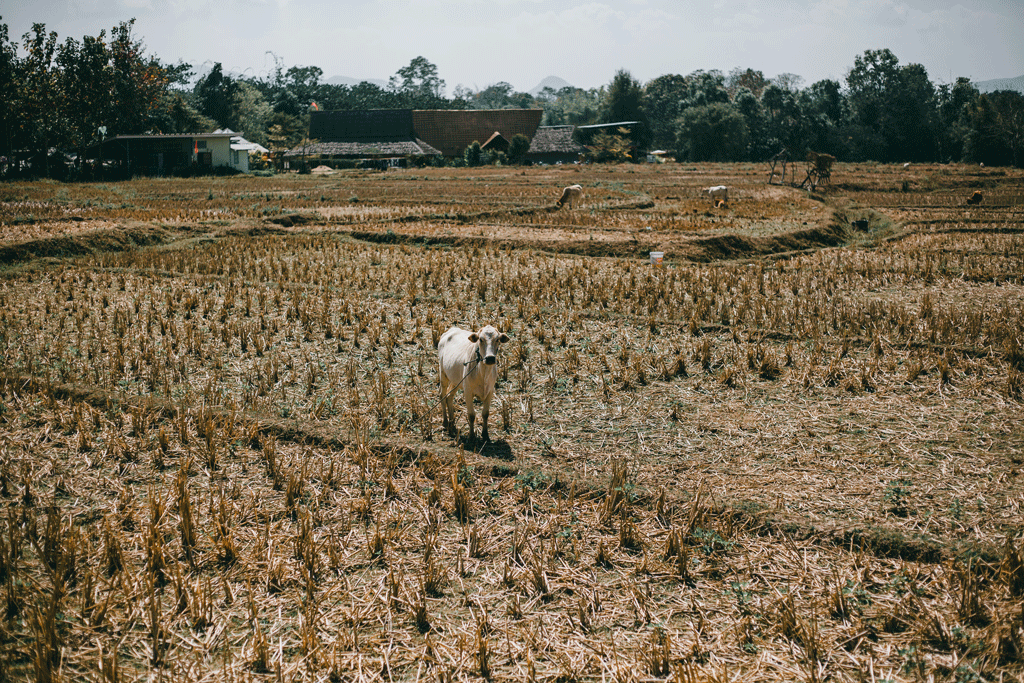
Crop residues remaining in the field after harvest are an important part of field management in dry regions.
Burning these residues may appear to provide a quick way to clear the field, but it can result in the loss of organic material and negatively affect the soil surface.
Instead, farmers can consider appropriate methods for chopping and managing crop residues according to field conditions and the requirements of the following crop.
ABOLLO Shredder machines help break down plant residues remaining in the field after harvest.
Chopping crop residues into smaller pieces can:
Make subsequent field operations easier.
Help distribute crop residues more evenly across the field.
Provide an alternative approach to burning crop residues.
Prepare the field for the next stage of soil management.
In dry and semi-arid regions, crop residue management should be planned according to field conditions and the requirements of the following crop.
Every rainfall event is valuable in dry regions.
One objective of field preparation should therefore be to support the retention and infiltration of rainfall within the field.
Suitable tillage methods, appropriate working depth and proper field management should be considered together.
During soil preparation, farmers should not focus only on loosening the soil. They should also consider how rainfall will move across and through the field.
Planting time can be critical in dry regions.
Delaying field preparation too long may result in missing an important rainfall period. On the other hand, planting too quickly when soil conditions are unsuitable may also reduce the potential for successful crop establishment.
For this reason, soil preparation, rainfall conditions and planting time should be planned together.
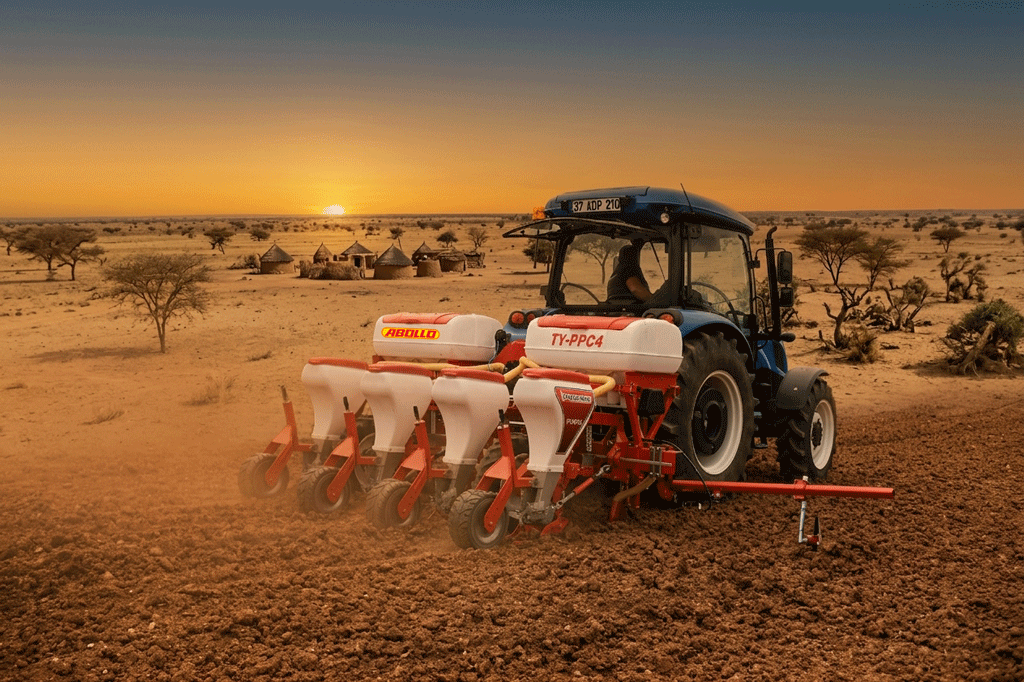
ABOLLO tillage machinery can help farmers carry out pre-planting field preparation efficiently when field conditions are suitable. The next step is to select planting equipment appropriate for the crop and production system.
Choosing the right agricultural machinery is especially important when farming in dry and semi-arid regions. The objective should not simply be to use more machinery, but to select the right implement for the soil condition, crop residue level, tractor capacity and required field operation.
For farmers in Chad, agricultural machinery for dry farming should be selected according to several factors, including:
Soil structure
Existing soil moisture
Field size
Previous crop
Amount of crop residue
Tractor horsepower
Required working depth
Required field capacity
Rainfall conditions
Type of crop to be planted
Different tillage and field management operations may require different types of machinery. ABOLLO offers a range of agricultural machinery that can be considered for different stages of field preparation and crop residue management.
Rotary Tillers can be used for preparing the soil before planting when field conditions are suitable. They are designed to work the soil and help create a suitable seedbed for the following crop.
For farmers preparing fields after previous cultivation, an appropriate rotary tiller can help complete soil preparation efficiently.
ABOLLO Rotary Tillers are available in different configurations and working widths, allowing farmers to consider machinery according to tractor power and field requirements.
However, rotary tillage should always be performed according to the actual soil condition. Excessive tillage is not necessarily beneficial in dry regions.
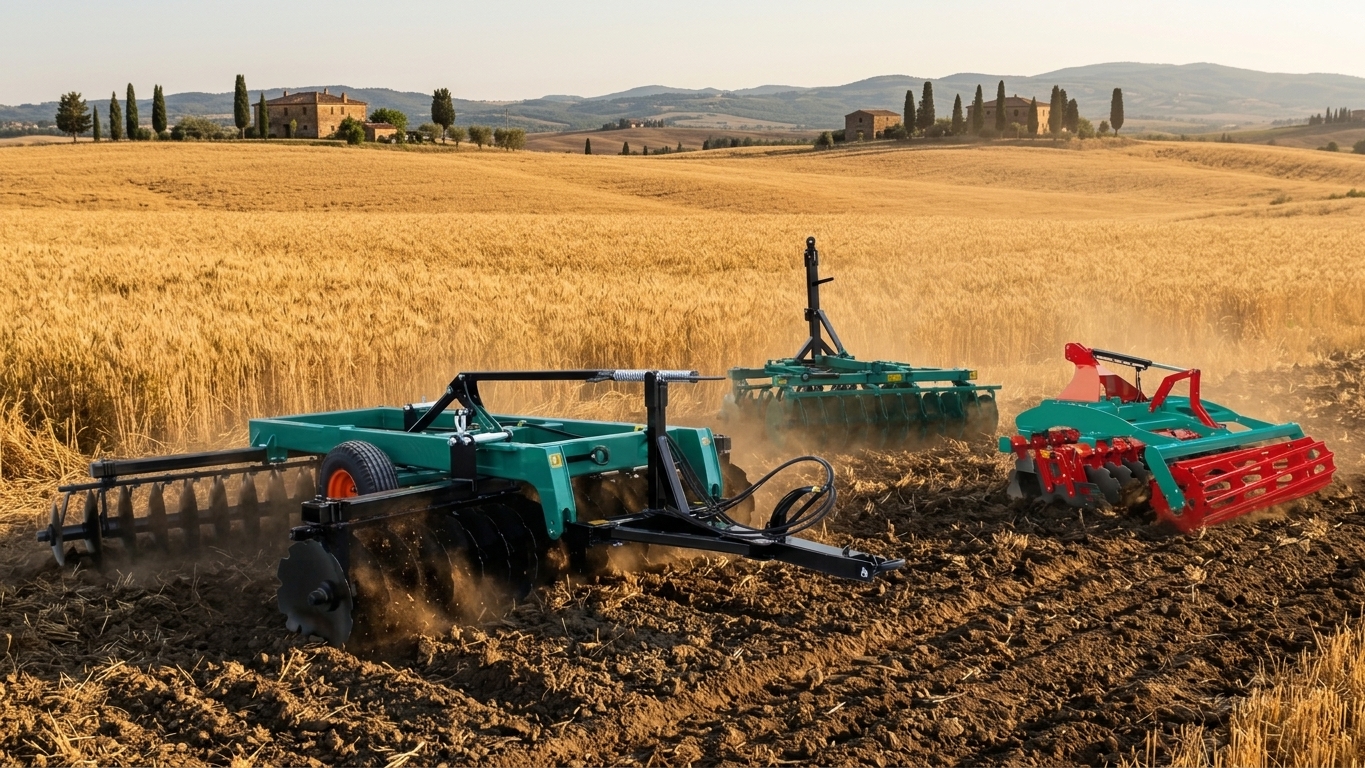
Disc Harrows are commonly used for surface and shallow soil cultivation. They can help incorporate or mix crop residues into the upper soil layer and prepare the field for subsequent operations.
In fields where crop residues remain after harvest, a suitable disc harrow can be part of an effective soil and residue management system.
ABOLLO Disc Harrows can provide an option for farmers who need to perform surface soil cultivation and residue-related field operations according to their soil and tractor conditions.
The correct working depth and machine configuration should be selected according to the field rather than applying the same setting to every soil type.
Cultivators are used for secondary soil tillage and can help prepare the seedbed after primary soil preparation.
Depending on the field condition, cultivators can be used to level and refine the soil surface and prepare the field for planting.
ABOLLO Cultivators provide another option for farmers who need to carry out secondary soil preparation while considering tractor capacity and field conditions.
In dry farming systems, the goal should be to achieve the required soil condition without unnecessary passes across the field.
After harvest, crop residues can become an important part of field management.
Instead of burning crop residues, farmers can consider mechanical residue management methods. Shredders can break down remaining plant material and help distribute residues more evenly across the field.
ABOLLO Shredders are designed for crop residue management and can be used as part of a field preparation strategy before the next crop.
Proper residue management can make subsequent field operations easier and provide an alternative to burning crop residues.
There is no single agricultural machine that is suitable for every field.
A farmer may need a Shredder for crop residue management, a Disc Harrow for surface soil and stubble cultivation, a Cultivator for secondary soil tillage or a Rotary Tiller for suitable pre-planting soil preparation.
The right combination depends on the field condition, soil type, previous crop, available tractor horsepower and the production system.
For this reason, farmers should evaluate the complete field operation rather than selecting machinery based only on working width or machine capacity.
ABOLLO offers different agricultural machinery solutions for soil tillage, crop residue management and planting operations. Farmers in Chad can evaluate these solutions according to their individual field conditions and tractor requirements.
1. Monitor rainfall conditions.
Plan field preparation and planting according to local rainfall patterns.
2. Avoid excessive tillage.
Evaluate whether every additional tractor pass is necessary.
3. Focus on conserving soil moisture.
Prioritize practices that support rainfall infiltration and moisture retention in the root zone.
4. Consider alternatives to burning crop residues.
Evaluate appropriate chopping and residue management solutions.
5. Choose machinery according to soil conditions.
Do not select machinery based only on working width.
6. Match machinery to tractor horsepower.
An unsuitable tractor-machine combination can increase fuel consumption and operating costs.
7. Plan field preparation and planting together.
Consider rainfall periods and crop requirements to complete preparation and planting at the right time.
Productive farming under dry and variable rainfall conditions is not only about working harder. It is also about managing soil and available water resources more effectively.
Proper soil preparation, effective crop residue management, timely planting and the use of machinery suited to actual field conditions can all contribute to improved farming efficiency.
ABOLLO provides soil tillage machinery, shredders, planting machines and solutions for various agricultural applications, helping farmers evaluate mechanization options suited to their needs.
To learn more about agricultural machinery suitable for your field conditions, tractor horsepower and crop, and to discover how to improve farming efficiency in dry regions of Chad, contact ABOLLO.


 0332 2515120