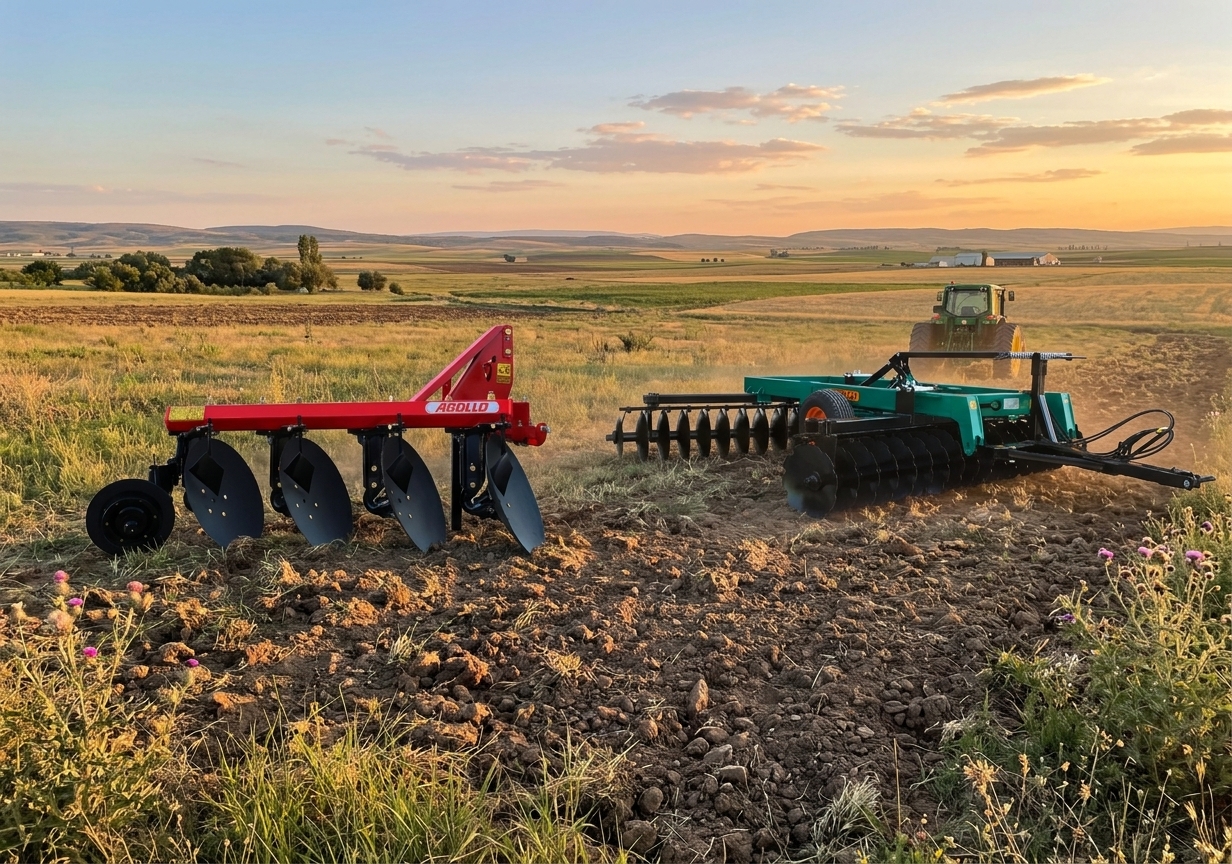
Choosing the right agricultural machinery for soil preparation is an important decision for farmers. A disc harrow and a plough are both widely used soil tillage implements, but they are designed for different purposes.
The answer depends on several factors, including soil type, required working depth, crop residue, field conditions, tractor power and the next farming operation.
Understanding the difference between a disc harrow and a plough can help farmers select the right machine for their specific field conditions.
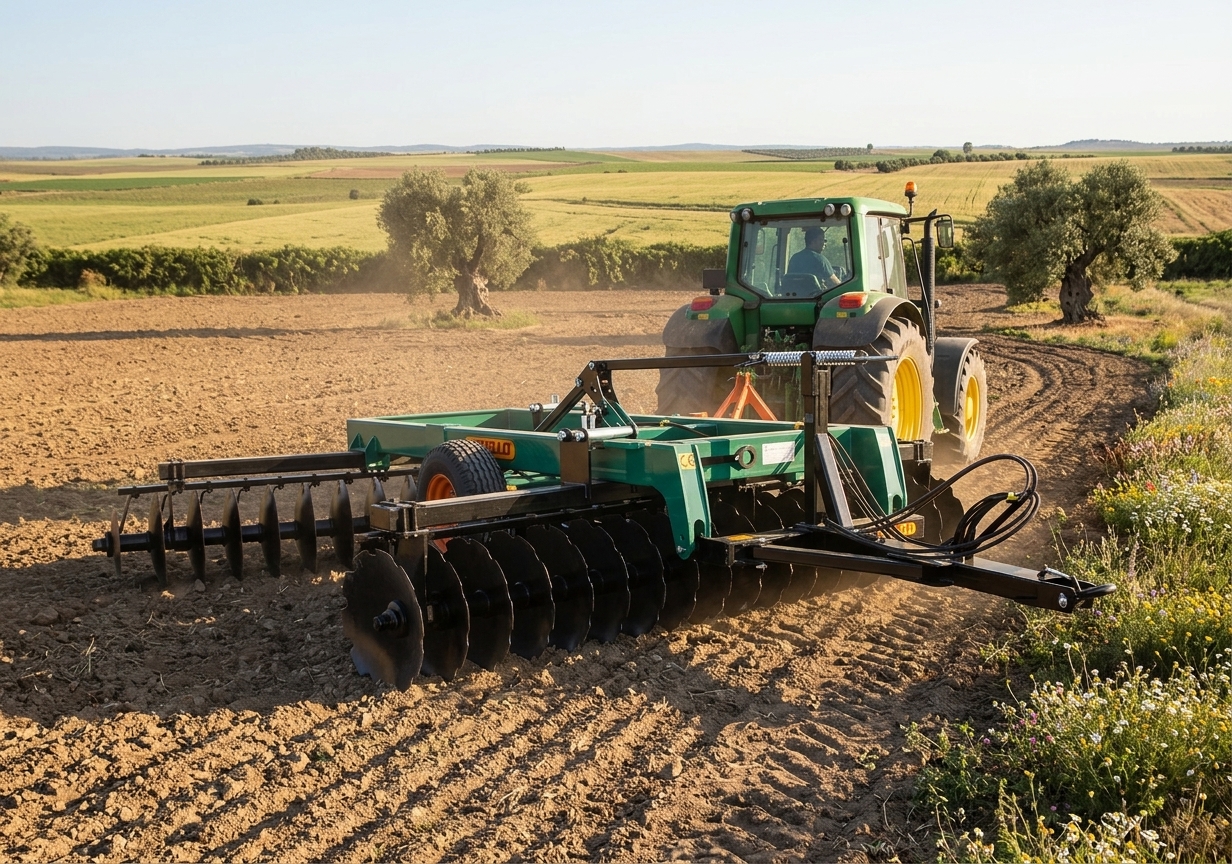
A disc harrow is a soil tillage implement that uses rotating discs to cut, break and mix the soil. It is commonly used for stubble management, crop residue incorporation, clod breaking and field preparation.
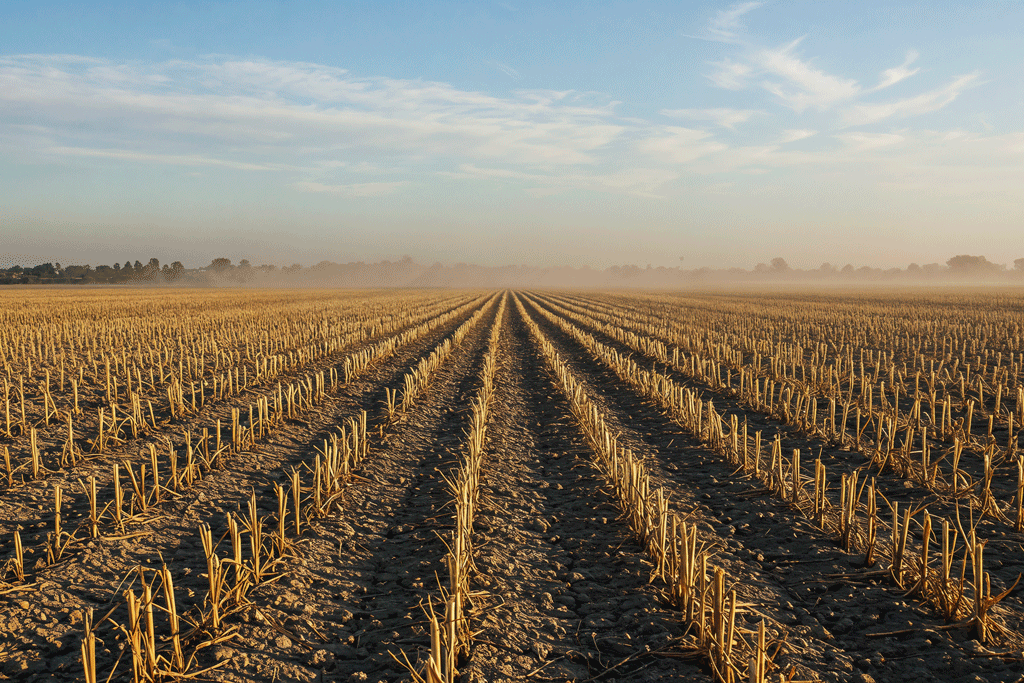
Disc harrows are particularly useful after harvesting when stalks and other crop residues remain on the field. The rotating discs cut the residues and mix them with the upper layer of soil.
A disc harrow can also be used after primary tillage to break larger soil clods and prepare a more suitable seedbed for planting.
The performance of a disc harrow depends on several factors, including:
Soil type
Soil moisture
Working depth
Disc diameter
Disc angle
Machine weight
Forward speed
Tractor power
Therefore, choosing a disc harrow should not be based only on working width. The machine should be matched to the tractor and field conditions.
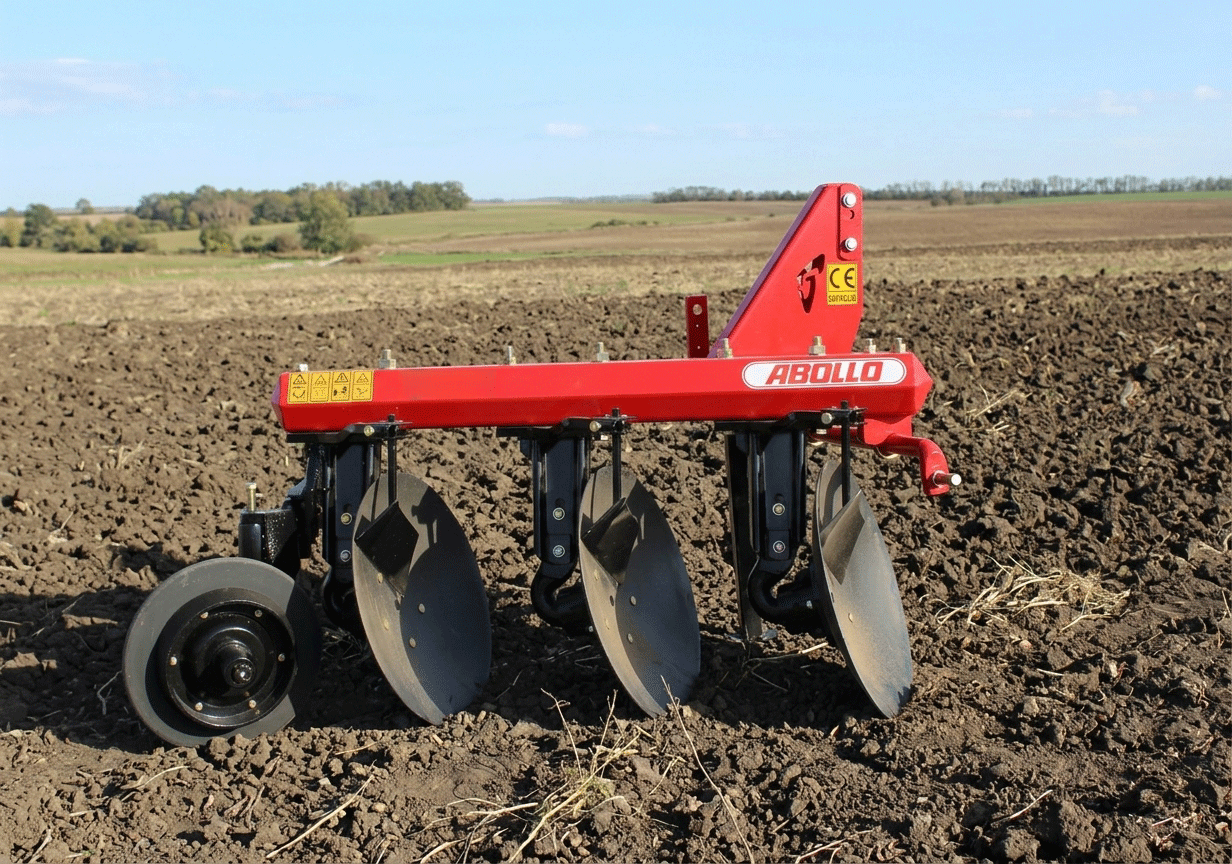
A plough is generally used for primary soil tillage. Its main purpose is to penetrate the soil and move or turn the soil layer to prepare the field for subsequent agricultural operations.
A disc plough uses rotating discs to cut and move the soil. It can be a suitable solution for primary tillage in field conditions where a disc-based ploughing system is preferred.
The ABOLLO Disc Plough is designed to penetrate the soil, cut the soil layer and move it through the rotating action of its discs. Its discs are manufactured from 5630 quality steel sheet, and the machine offers adjustable settings for different soil conditions.
Depending on the model and operating conditions, ABOLLO Disc Plough models offer working depths of approximately 15–33 cm.
The main difference between a disc harrow and a plough is the type of soil tillage operation they are designed to perform.
| Feature | Disc Harrow | Plough |
|---|---|---|
| Main Purpose | Soil cutting, mixing and residue management | Primary soil tillage and soil turning |
| Typical Operation | Stubble management and secondary or intermediate tillage | Primary tillage |
| Working Depth | Usually shallower, depending on machine and conditions | Generally deeper |
| Crop Residue Management | Very effective for cutting and incorporating residues | Can bury and turn residues |
| Soil Disturbance | Cuts and mixes the soil | Penetrates and moves/turns the soil |
| Field Preparation | Excellent for subsequent seedbed preparation | Often used as an earlier primary tillage operation |
| Tractor Requirement | Depends on width, weight and soil condition | Depends strongly on working depth, width and soil condition |
A disc harrow is generally associated with shallower soil cultivation and residue management, while a plough is generally used for deeper primary tillage and soil movement.
When comparing a disc harrow vs plough for soil preparation, farmers should look beyond the machine name and consider the actual field operation they need to perform.
Working depth is one of the most important differences between a disc harrow and a plough.
A plough is generally selected when deeper primary tillage is required. A disc harrow is more commonly used for shallower soil cutting, residue incorporation, clod breaking and field preparation.
However, the actual working depth depends on machine design, soil conditions, machine weight, tractor power and operating settings.
For example, ABOLLO Disc Plough models offer approximately 15–33 cm working depth, depending on the model and operating conditions.
A disc harrow should not necessarily be operated as deeply as possible. For residue management, the objective may be to cut and incorporate crop residues effectively while avoiding unnecessary soil disturbance.
Soil type is another important factor when deciding between a disc harrow and a plough.
Heavy or compacted soils may require a stronger primary tillage operation. In other field conditions, a disc harrow may provide sufficient soil cutting and residue incorporation without intensive ploughing.
Farmers should consider:
Soil texture
Soil hardness
Soil moisture
Existing compaction
Previous crop
Crop residue levels
Required planting conditions
Working soil at the correct moisture level is also important. Cultivating soil when it is excessively wet can damage soil structure and increase the risk of compaction.
Crop residue management is an important consideration when choosing a disc harrow or plough.
After harvesting wheat, barley, maize, sunflower and other crops, stalks and other residues can remain on the field.
A disc harrow is well suited to cutting and incorporating crop residues and stubble into the upper soil layer.
The ABOLLO Goble Disc Harrow is designed for applications such as stubble management, crop residue incorporation, soil clod breaking and general field preparation.
A plough can also bury crop residues by moving and turning the soil during primary tillage.
The better choice depends on the desired result and the farmer's tillage system.
Tractor power is an important consideration for both disc harrows and ploughs.
However, tractor horsepower should not be determined by working width alone.
The required tractor power depends on:
Working width
Working depth
Machine weight
Soil type
Soil moisture
Forward speed
Disc diameter
Field conditions
ABOLLO Goble Disc Harrow models have recommended tractor power requirements ranging approximately from 60 to 140 HP, depending on the model and working width.
ABOLLO Disc Plough models have recommended tractor power requirements ranging approximately from 40 to 120 HP, depending on the model and configuration.
These are model-specific recommendations. Actual tractor requirements can vary according to soil conditions and operating practices.
There is no single answer to the question “Which is better, a disc harrow or a plough?”
The better machine depends on the operation you want to perform.
A disc harrow may be the better choice when you need to:
Cut crop residues
Manage stubble
Incorporate residues into the soil
Break soil clods
Perform shallow soil cultivation
Prepare the field after primary tillage
Prepare the seedbed for subsequent operations
The ABOLLO Goble Disc Harrow range includes models with working widths from approximately 185 cm to 345 cm, allowing farmers to select a model according to tractor capacity and field requirements.
A plough may be the better choice when deeper primary tillage is required.
Consider a plough when you need to:
Perform primary soil tillage
Penetrate deeper into the soil
Move or turn the soil
Prepare the field before secondary tillage
Create suitable soil conditions for subsequent field operations
The appropriate plough should be selected according to soil conditions, required working depth, tractor capacity and field size.
Not in every situation.
A disc harrow and a plough are designed for different soil tillage operations.
A plough is generally used for deeper primary tillage and soil movement, while a disc harrow is commonly used for cutting, breaking and mixing the upper soil layer and managing crop residues.
In some farming systems, a disc harrow may provide sufficient soil preparation without ploughing. However, where deeper primary tillage is required, a plough may still be necessary.
The decision should consider:
Soil condition
Required working depth
Crop residue level
Previous crop
Crop to be planted
Tractor capacity
Number of field passes
The goal should not simply be to disturb the soil as deeply as possible. The objective is to create suitable soil conditions for the next agricultural operation.
Before choosing a disc harrow or plough, consider the following questions.
1. What Is Your Soil Type?
Heavy clay, loam, sandy and other soil types can require different tillage approaches.
2. How Deep Do You Need to Work?
If deeper primary tillage is required, a plough may be more suitable.
If the main objective is crop residue management, stubble cultivation or shallower soil preparation, a disc harrow may be more suitable.
3. How Much Crop Residue Is on the Field?
Fields with significant crop residues may benefit from a disc harrow designed for effective cutting and incorporation.
4. What Tractor Do You Have?
The machine should be matched to the tractor's available power and lifting capacity.
Working width, machine weight and soil conditions should all be considered when selecting the appropriate model.
5. What Is the Next Field Operation?
Think about the complete crop production process.
If the next operation is seedbed preparation or planting, the required soil condition should determine your tillage approach.
6. How Many Passes Are Required?
A suitable machine can help reduce unnecessary field passes.
The best machine is not necessarily the one that works deepest. It is the machine that achieves the required soil condition efficiently and appropriately for the farming system.
ABOLLO offers soil tillage machinery designed for different field preparation requirements.
The ABOLLO Goble Disc Harrow is designed for soil cutting, crop residue incorporation, stubble management, clod breaking and field preparation.
The ABOLLO Disc Plough is designed for primary soil tillage using rotating discs and is available in different configurations for different tractor capacities and field conditions.
Farmers should select the appropriate machine according to their soil type, required working depth, crop residue level, tractor capacity and intended field operation.
A disc harrow is not simply a smaller version of a plough, and a plough is not simply a heavier disc harrow.
They are designed for different soil tillage tasks.
Choose a disc harrow when crop residue management, stubble cultivation, soil mixing, clod breaking or field preparation is the main objective. Choose a plough when deeper primary tillage and soil movement are required.
In some farming systems, using both machines at different stages may provide the most appropriate soil preparation strategy.
The best agricultural machinery is the machine that matches your soil, crop, tractor, working depth and actual field requirements.
What is the difference between a disc harrow and a plough?
A plough is generally used for deeper primary soil tillage and soil movement, while a disc harrow is commonly used for cutting, breaking and mixing soil and crop residues.
Which is better for soil preparation, a disc harrow or a plough?
Neither machine is universally better. A disc harrow is generally more suitable for residue management, clod breaking and shallower soil cultivation, while a plough is generally used for deeper primary tillage.
Can a disc harrow replace a plough?
A disc harrow can replace ploughing in some farming systems and field conditions, but it cannot replace a plough in every situation, particularly when deeper primary tillage is required.
Which is better for crop residue management?
A disc harrow is generally well suited to cutting and incorporating crop residues and stubble into the soil.
Which works deeper, a disc harrow or a plough?
A plough is generally designed for deeper primary tillage. Actual working depth depends on machine design, soil conditions, tractor capacity and operating settings.
Can a disc harrow be used for primary tillage?
A disc harrow can perform significant soil cutting and mixing, but the appropriate machine and operating depth depend on the field condition and the intended tillage system.
How do I choose between a disc harrow and plough?
Consider soil type, required working depth, crop residue, tractor power, field conditions, previous crop and the next agricultural operation.
Does a disc harrow require less tractor power than a plough?
Not necessarily. Tractor requirements depend on working width, working depth, machine weight, soil condition and operating speed. Always check the manufacturer's recommendation for the specific machine model.
If you want to learn more about how a Goble Disc Harrow works, its main applications, working principles and advantages in field operations, read our detailed guide:


 0332 2515120