
Maize is one of the most important food crops in Kenya, and it is grown across a wide range of agro-ecological zones and soil types. Because growing conditions differ from one region to another, land preparation should not follow exactly the same method on every farm. Soil type, moisture conditions, previous crop residues, field history and the intended planting system should all be considered before selecting a tillage method.
Good land preparation can help create suitable conditions for maize establishment, but the objective should not simply be to disturb the soil as much as possible.
A suitable preparation method should help farmers:
create an appropriate seedbed;
manage weeds and crop residues;
improve the physical condition of the planting zone;
prepare the field for uniform planting;
conserve soil moisture where appropriate;
avoid unnecessary soil disturbance.
ABOLLO's maize production guidance emphasizes proper land preparation as part of the wider maize production process, together with site selection, seed selection, planting, soil fertility management and water management.
The right timing depends on the local rainfall pattern, soil condition and production system.
Preparing the field too early or working soil when it is excessively wet can create problems. On the other hand, waiting too long can reduce the time available for planting after suitable rainfall.
In rain-fed areas, soil moisture management is particularly important. Research from Kenya has shown that rainfall variability and soil water availability can strongly influence maize production, especially in sub-humid and semi-arid regions.
There is no single tillage method that is ideal for every maize field in Kenya.
Well-drained, well-aerated and sufficiently deep soils with adequate organic matter are generally considered suitable for maize production, but actual field conditions vary considerably.
Before choosing machinery, farmers should consider:
soil texture;
compaction;
drainage;
current soil moisture;
amount of crop residue;
previous crop;
field slope;
required planting conditions.
A machine that works well on one field may not provide the same result on another field if soil moisture, residue levels or soil structure are different.
There is no universal working depth that should be applied to every maize field.
The required depth depends on the tillage objective and the condition of the field. For example, shallow residue management and seedbed preparation are different operations from deeper primary tillage.
ABOLLO documentation on maize production in Kenya describes conventional land preparation practices involving ploughing and harrowing, while one ABOLLO document reports an average ploughing depth of about 15 cm for a conventional tillage context. This should not be interpreted as a universal target depth for every Kenyan farm.
The practical question is therefore not:
“What is the deepest possible tillage?”
It is:
“What working depth is appropriate for this field and this operation?”
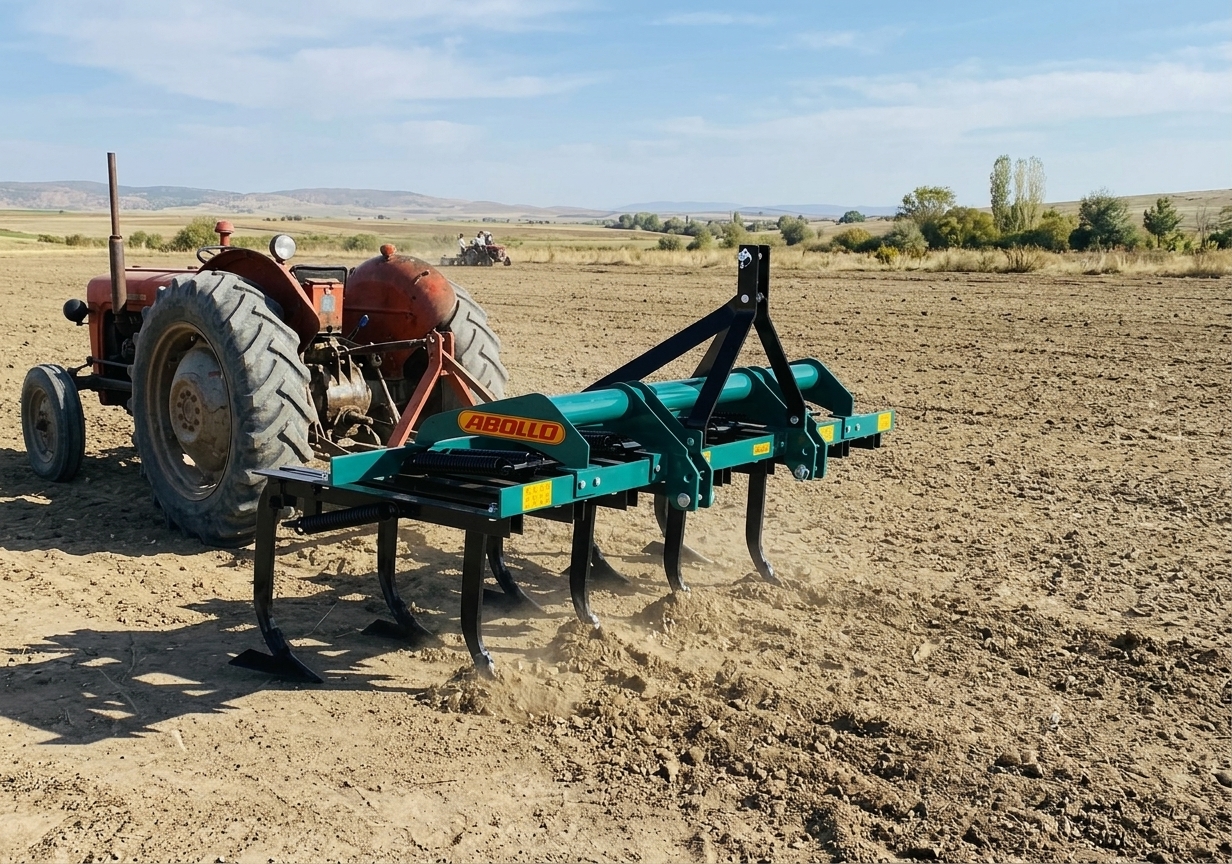
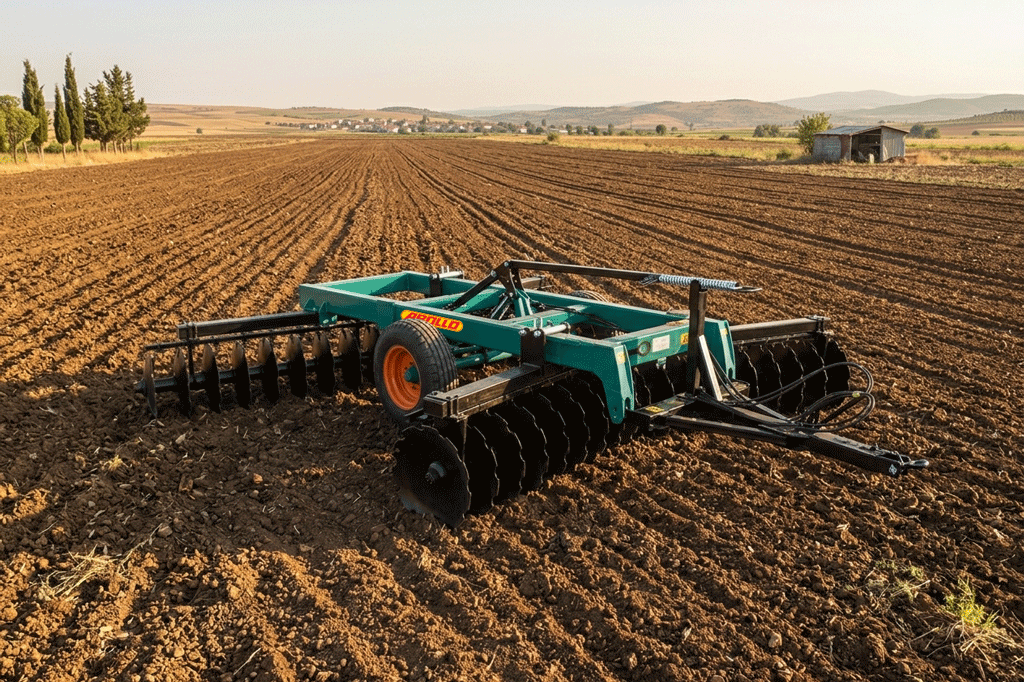
A disc harrow can be useful in maize field preparation when the required operation matches the machine's working characteristics.
Disc harrows can be considered for operations such as:
secondary soil tillage;
seedbed preparation;
surface soil mixing;
incorporation of suitable crop residues;
breaking and leveling previously worked soil.
However, a disc harrow should not automatically be treated as a replacement for every type of ploughing operation.
The choice should depend on the required working depth, soil condition, crop residues and the overall tillage system.
A plough and a disc harrow perform different soil tillage functions, so the right choice depends on the field operation.
A plough may be selected when deeper primary soil inversion or intensive initial soil preparation is required. A disc harrow may be more appropriate when the objective is surface or secondary tillage, residue mixing and seedbed preparation.
ABOLLO's documentation for Kenyan maize production describes conventional systems using combinations of ploughing and harrowing, while conservation agriculture systems can involve reduced soil disturbance or no-tillage approaches.
Crop residues should not automatically be removed from every field.
In Kenya, conservation agriculture research has examined systems involving residue retention and reduced or zero tillage. Studies in sub-humid and semi-arid areas have found that residue retention and reduced tillage can influence soil water availability and soil conditions.
Therefore, before deciding whether residues should be incorporated, retained or otherwise managed, farmers should consider:
rainfall conditions;
soil moisture;
residue quantity;
weed pressure;
the next crop;
available machinery;
the selected production system.
Yes. Conservation agriculture is an important part of the discussion around maize production in Kenya, particularly where soil moisture conservation and reduced soil disturbance are priorities.
Conservation approaches can include reduced tillage, zero tillage and residue retention. However, this does not mean that one system should replace conventional tillage on every farm.
Research in Kenya has shown that the performance of different systems can vary according to soil fertility, rainfall conditions and location.
The right machine should be selected according to the operation rather than simply choosing the widest or heaviest machine available.
Consider the following factors:
1. Tractor Power
The tractor must be matched to the machine's working width, weight and intended working conditions.
2. Soil Type
Heavy soils may create different draft requirements from lighter soils.
3. Working Depth
Select the machine according to the depth actually required for the operation.
4. Crop Residues
The quantity and type of residues can influence which tillage implement is appropriate.
5. Field Size
Larger farms may benefit from wider equipment when tractor capacity and field conditions allow it. Smaller fields may require more maneuverable equipment.
6. Production System
Conventional tillage and conservation agriculture may require very different machinery strategies.
A good seedbed should provide suitable physical conditions for planting and early crop establishment.
The goal is not necessarily to make the soil extremely fine or to perform as many passes as possible. Excessive soil disturbance can be counterproductive in some production systems.
The appropriate seedbed preparation should therefore be based on:
soil moisture;
soil structure;
residue level;
planting equipment;
required planting depth;
local rainfall conditions.
ABOLLO's maize guidance specifically includes land preparation and planting as connected steps in the production process.
Some common mistakes can reduce the effectiveness of field preparation:
Working soil when it is too wet.
Choosing machinery only according to working width.
Using excessive tillage without a clear agronomic objective.
Ignoring crop residues.
Choosing a machine that is not properly matched to the tractor.
Assuming that the same tillage method works equally well in every region.
Focusing on maximum working depth instead of the required working depth.
Kenya's diverse maize-growing environments make field-specific decision-making particularly important.
Choosing the right agricultural machinery can make land preparation, planting and other field operations more efficient. For maize farmers in Kenya, however, the best machine is not necessarily the largest or most powerful one. Machinery should be selected according to soil conditions, field size, crop residues, required working depth, tractor capacity and the overall production system.
ABOLLO Agricultural Machinery offers a range of equipment designed for different stages of agricultural production. For maize farming, farmers can evaluate machinery for soil preparation, seedbed preparation and planting according to their specific field requirements.
Depending on the farming system and field conditions, ABOLLO equipment categories may include:
Disc Harrows – for secondary tillage, seedbed preparation, surface soil mixing and suitable residue incorporation.
Ploughs – for primary soil preparation where soil inversion and deeper tillage are required.
Rotary Tillers – for soil preparation and seedbed refinement where the field and production system are suitable for rotary tillage.
Power Harrows – for seedbed preparation and soil conditioning before planting.
Seed Drills and Precision Planters – for establishing crops with a planting system matched to the crop and field requirements.
One of the key advantages of choosing agricultural machinery from an experienced manufacturer is the ability to select equipment according to the actual requirements of the farm rather than applying the same solution to every field.
For Kenyan maize farmers, this approach is particularly important because growing conditions vary considerably between regions. Soil type, rainfall, residue levels, farm size and tractor capacity can all affect machinery selection.
ABOLLO's approach is therefore based on providing practical agricultural machinery solutions for different field operations, while allowing farmers and agricultural professionals to select the appropriate equipment according to their local conditions.
Before planting maize, check:
Is the soil moisture suitable for the planned operation?
Is the field free from excessive compaction in the planting zone?
Have crop residues been managed according to the selected production system?
Is the chosen tillage method appropriate for the field?
Is the tractor powerful enough for the selected implement?
Is the working depth appropriate for the operation?
Is the seedbed suitable for the planting machine?
Has the planting date been planned according to local conditions?
Good maize production starts with decisions made before the seed enters the soil. In Kenya, where maize is grown under diverse soil and climatic conditions, field-specific land preparation can be more valuable than simply following a single standard tillage method.
If you are interested in maize production, soil preparation and agricultural machinery, these ABOLLO guides may also be useful:
Learn how a Goble Disc Harrow can be used for stubble management, crop residue incorporation, soil cultivation and field preparation, and what factors such as soil moisture, working depth and tractor power can affect its performance.
Discover the key differences between disc-type and coulter-type pneumatic precision planters and learn how the right planting system can support accurate seed placement and more uniform crop establishment.
Explore the most common mistakes that can reduce corn silage quality and productivity, including incorrect harvest timing, unsuitable chop length, dull blades, tractor-machine mismatch and inadequate machinery maintenance.


 0332 2515120